Readers familiar with TIAA-Divest! may remember that the campaign was born from the unsuccessful fight to block a massive methane gas fired power plant that TIAA financed in the environmentally and financially disadvantaged community of Dover, NY. TIAA maintains several subsidiary companies devoted entirely to dirty, climate destroying fossil fuel power plants. This is the story of TIAA’s latest fossil-power gamble…
On March 28, 2018, FirstEnergy Solutions, an Ohio-based power generation company, filed for bankruptcy. At the time, few people understood that this was one small chapter in the story of the largest bribery scheme in the history of Ohio. And none of TIAA’s 5 million participants would know that FirstEnergy’s collapse had made them part owners of two obsolete coal power stations and three troubled nuclear plants.
As climate urgency mounts, investors are realizing that stranded assets are one of the most significant risks they will face. A stranded asset is something that is owned, but unusable, such as oil drilling rights in an area that prohibits oil drilling, or a power plant that’s too dirty to operate and too expensive to modernize. The FirstEnergy debacle is just one of the first snowballs in an avalanche of asset strandings that will leave private equity investors like Nuveen, Blackrock and the country’s largest banks holding the bag for failed fossil energy companies.
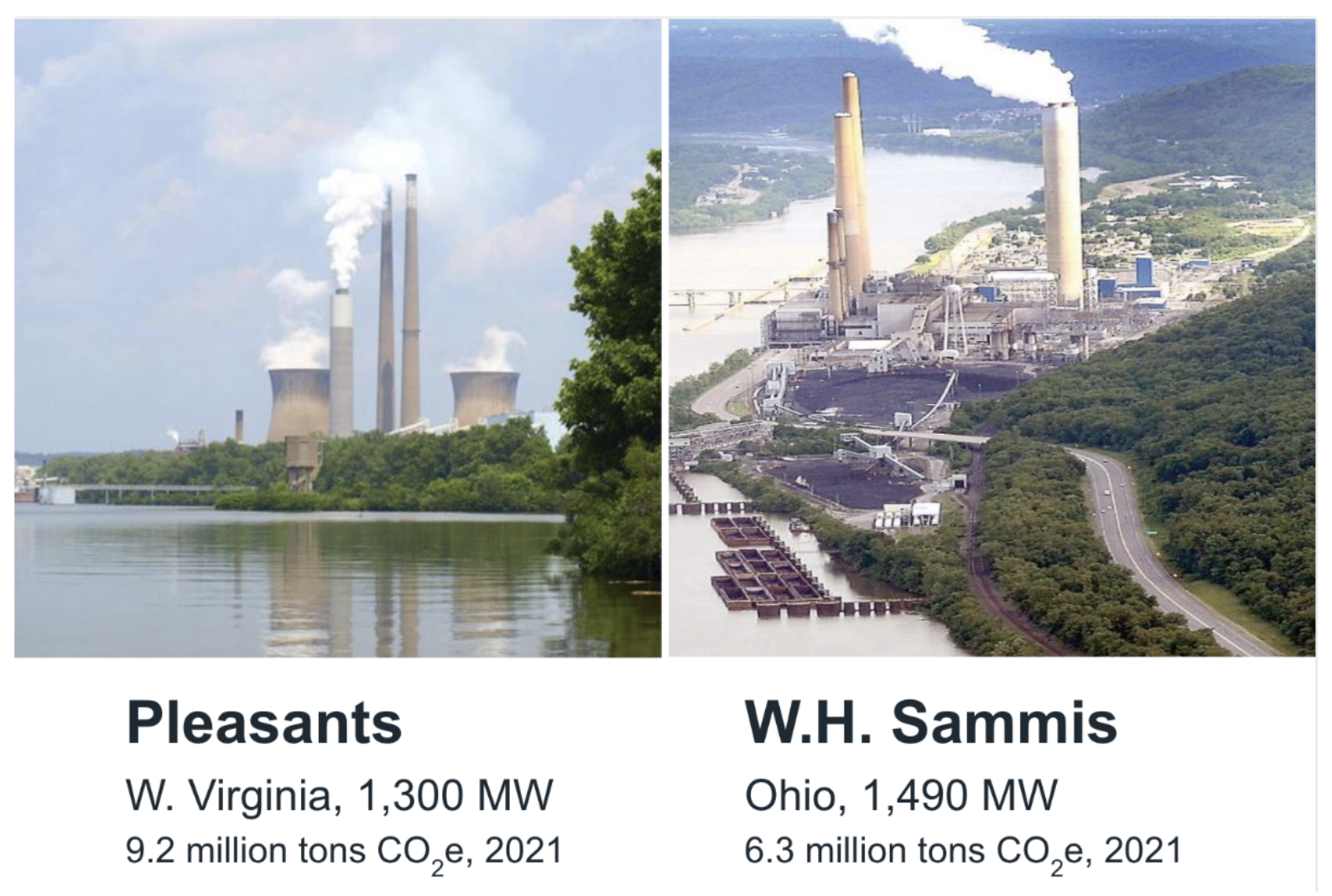
First Energy Solutions’ Pleasants and W.H. Sammis coal-fired power plants helped sink the company and left TIAA participants as co-owners of stranded assets.
FirstEnergy Solutions had been known as a troubled company for many years. In 1978 the Pleasants power plant, one of two coal fired electric generating plants owned by the company’s predecessor Allegheny Energy, was the site of the deadliest construction accident in US history. The Willow Island disaster claimed the lives of 51 workers. By 2016 the company was in severe financial distress and began to issue dire warnings to shareholders.
By 2018, Nuveen, TIAA’s investment management division, had made a significant investment in FirstEnergy Solutions (FES). The details, including the amount and form of the investment, are opaque, obscured by layers of corporate and bankruptcy filings, but the amount was large enough that Nuveen would claim 40% of FES’ assets as the bankruptcy unfolded, making them the largest shareholder.
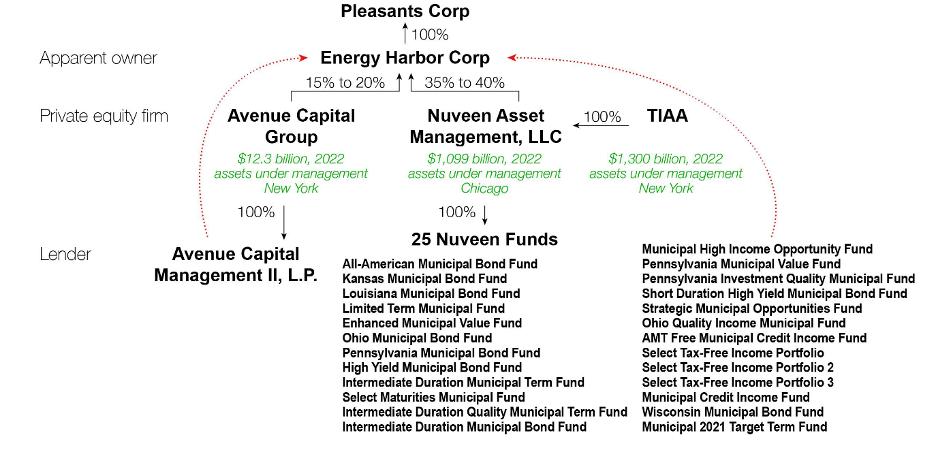
Follow the money if you can: If your TIAA portfolio included any of the funds listed above, you may have owned a piece of Nuveen’s coal plants. Image courtesy IEEFA
Nuveen’s connection to the company came as a surprise to those trying to keep track of TIAA’s finances. The paper trail created by court filings and the Federal Energy Regulatory Commission provided the information that enabled Seth Feaster, an Energy Data Analyst at the Institute for Energy Economics and Financial Analysis, to uncover TIAA’s connection to FES, but it was no easy task. Feaster likens his research to Alice in Wonderland. “The public information is often just a tiny door into complex financial structures, hidden deep within Federal filings, filings at bankruptcy courts, pension funds, or other financial documents. In most cases, even this information still hides ultimate ownership, and sheds little light on other forms of deep financial involvement.” Today Feaster wonders what decision-making process compelled TIAA, a company that touts its environmental values, to bail out FES, whose two coal plants “emitted fifteen and a half million tons of CO2e greenhouse gases” in 2021 alone. Clearly this was not an investment decision driven by a concern for climate issues, and it wasn’t financially smart either.
The FirstEnergy failure revealed not only financial mismanagement and climate destruction but also government corruption. In 2020, the FBI brought charges of racketeering against five Ohio legislators, including then-Speaker Larry Householder. First Energy had bribed lawmakers and Ohio’s Governor to pass $1.3 billion in subsidies for its nuclear plants. It is unlikely that Nuveen would have known about the web of shell companies and illegal payments involved, but its due diligence processes appear to be in dire need of an overhaul.
On environmental, social, and governmental grounds, this investment earns a failing grade. And TIAA is hiding all of this. How many other dying fossil fuel plants are being funded by our hard-earned investments?